There’s something about the word “Horizon” that sticks with you. Maybe it’s the idea of the unknown, or something just out of reach. For me, it even loops back to old EPCOT memories with Horizons. So landing on Event Horizon felt like the right kind of random pick—and honestly, it hit harder than expected.
This is one of those films that reminds you how terrifying space can be when it’s not about exploration, but about what shouldn’t be found.
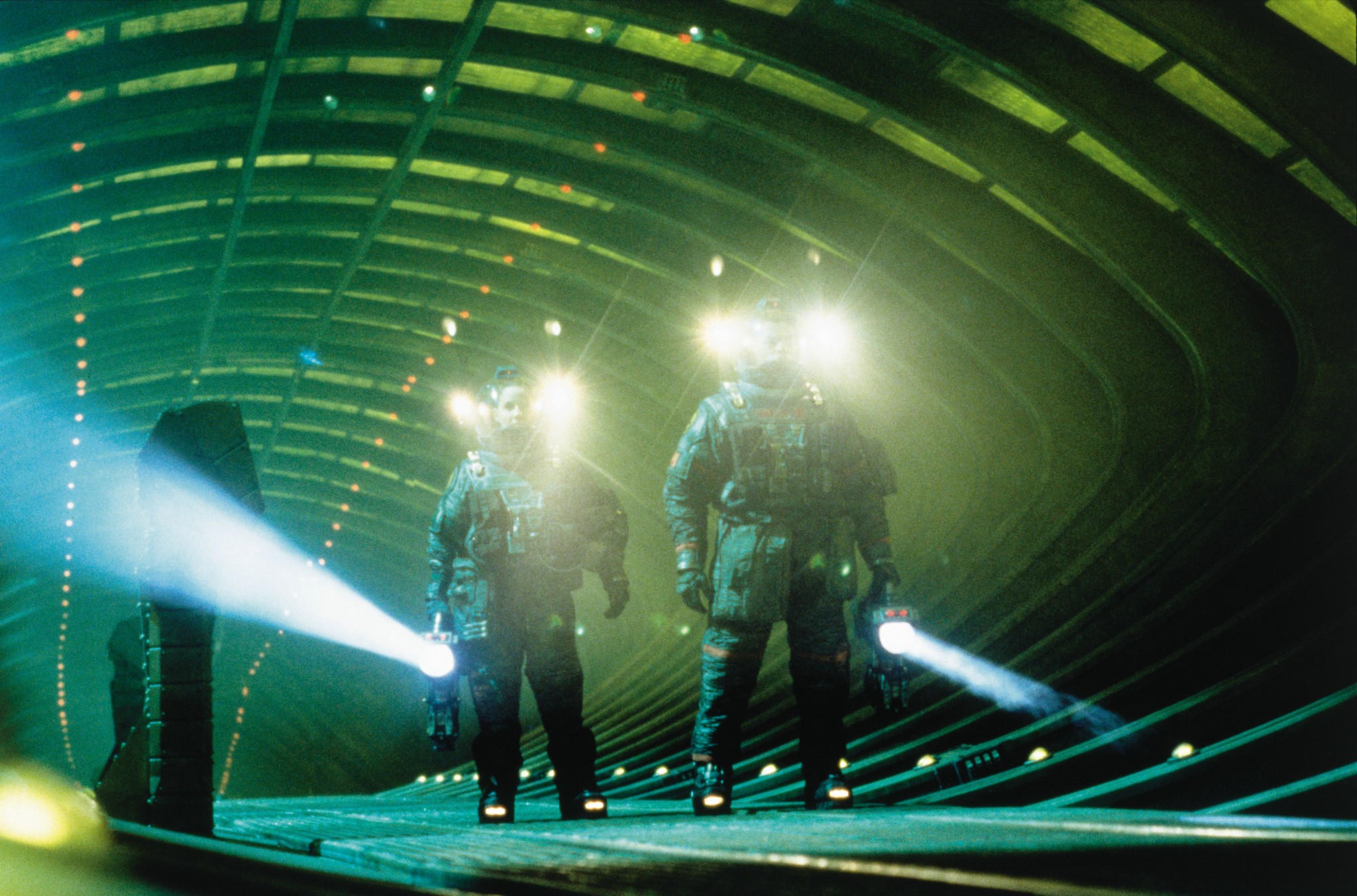
Right from the start, the isolation does a lot of the heavy lifting. We’re miles and miles away from Earth, heading toward Neptune, and the tone wastes no time settling into something cold and uneasy. The setup is simple: a rescue crew investigates a ship that vanished years ago and has suddenly reappeared. But the execution? That’s where things get unsettling fast.
Seeing Sam Neill again in this role was a standout moment. Most people instantly connect him to Jurassic Park, but here he leans fully into something darker and more intense. His character, Dr. Weir, feels like he’s already halfway lost before the real horror even begins.
Directed by Paul W. S. Anderson, the film carries his signature style—fast-paced, visually striking, and loaded with atmosphere. He’s often compared to bigger blockbuster directors, but this might be his most ambitious work. There’s a clear attempt here to blend spectacle with something more psychological, and for the most part, it works.
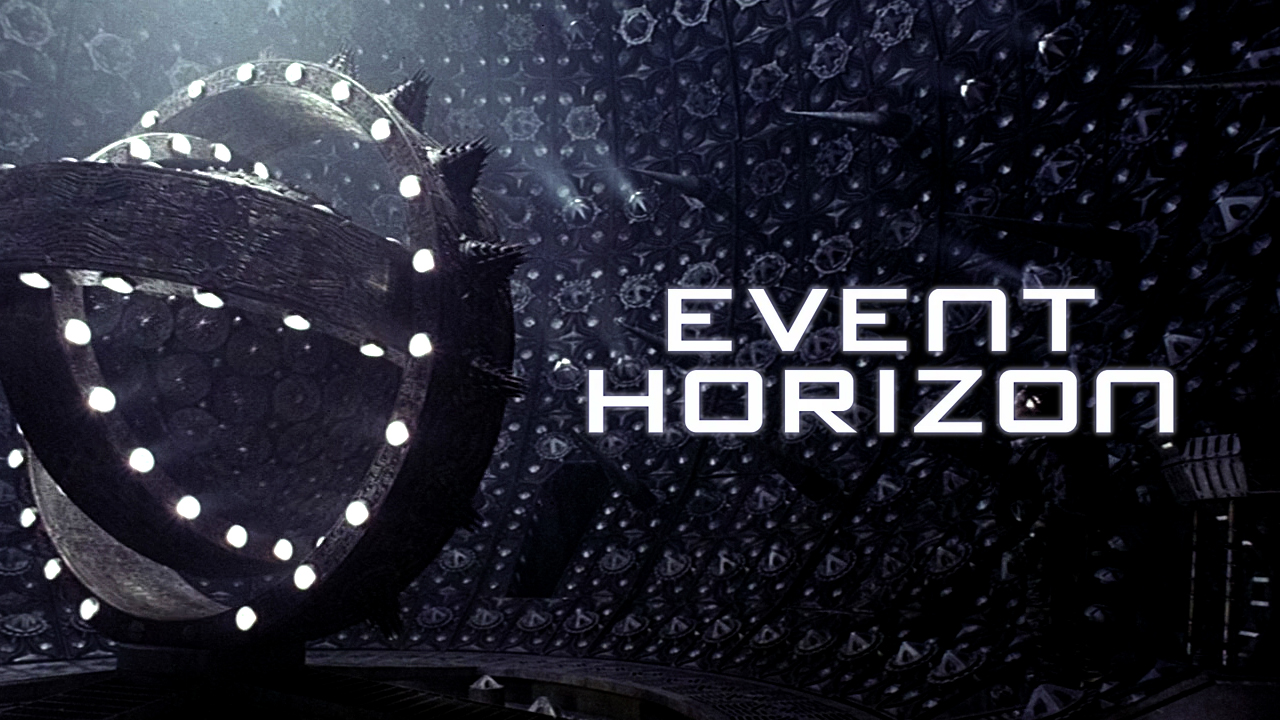
What really elevates Event Horizon is its atmosphere. The ship itself feels alive in the worst way possible. The gothic design, the cathedral-like interiors, and that looming darkness overhead create a constant sense of pressure. It’s not just a setting—it’s a presence.
And then there’s the horror.
This isn’t just jump scares or gore (though it has plenty of both). It leans into something more cosmic and unknowable. The idea that the ship went somewhere beyond human understanding—and brought something back with it—gives the film a strong Lovecraftian edge. It taps into that fear of the unknown, the kind that doesn’t need full explanation to feel terrifying.
There are also clear influences scattered throughout. You can feel echoes of Alien in the crew dynamics, Hellraiser in the design and brutality, and even The Shining in some of the visual moments. Instead of feeling derivative, it all blends into something uniquely intense.
That said, the film isn’t perfect.
One of the biggest drawbacks is the lack of deeper emotional connection with the crew. The characters are distinct and memorable enough to follow, but not always developed enough to fully invest in. There are moments where the film tries to shortcut emotional weight, and it doesn’t always land. You get glimpses of what could have been—especially knowing there was more footage that never made it into the final cut.
Still, even with those flaws, the experience holds up.
The pacing keeps things moving, the tension builds effectively, and the overall vibe is consistently oppressive in the best way. It’s the kind of movie that feels even more intense when watched in the dark, preferably with zero distractions.
The Bottom Line
Event Horizon isn’t just one of the better sci-fi horror films of the 1990s—it’s easily in the conversation for one of the most memorable horror films of that era, period. It’s unsettling, ambitious, and sticks with you long after it ends. The flaws are there, but they’re overshadowed by atmosphere, concept, and execution.
If you’re into horror that leans into the unknown and doesn’t feel the need to explain everything, this one still delivers.
Highly recommended for a late-night watch.