Apple TV Takes Sign Language Accessibility to the Next Level
With a new on-and-off sign language feature for movies and shows, Apple is making a major move toward a more accessible streaming experience for the Deaf community.
Now this is something worth getting excited about!
For years, Deaf viewers have relied heavily on closed captions to enjoy movies and television. While captions have come a long way, wouldn’t it be nice to watch a movie with American Sign Language (ASL) interpretation without searching for an entirely different version? Well, Apple TV is making that happen!
On November 10, 2026, Apple announced its new Sign Language interpretation feature, launching November 13 alongside the premiere of Being Heumann. Viewers can turn ASL or British Sign Language (BSL) interpretation on or off while watching supported titles, much like switching closed captions on or off. For the Deaf community, that’s a pretty exciting step forward.
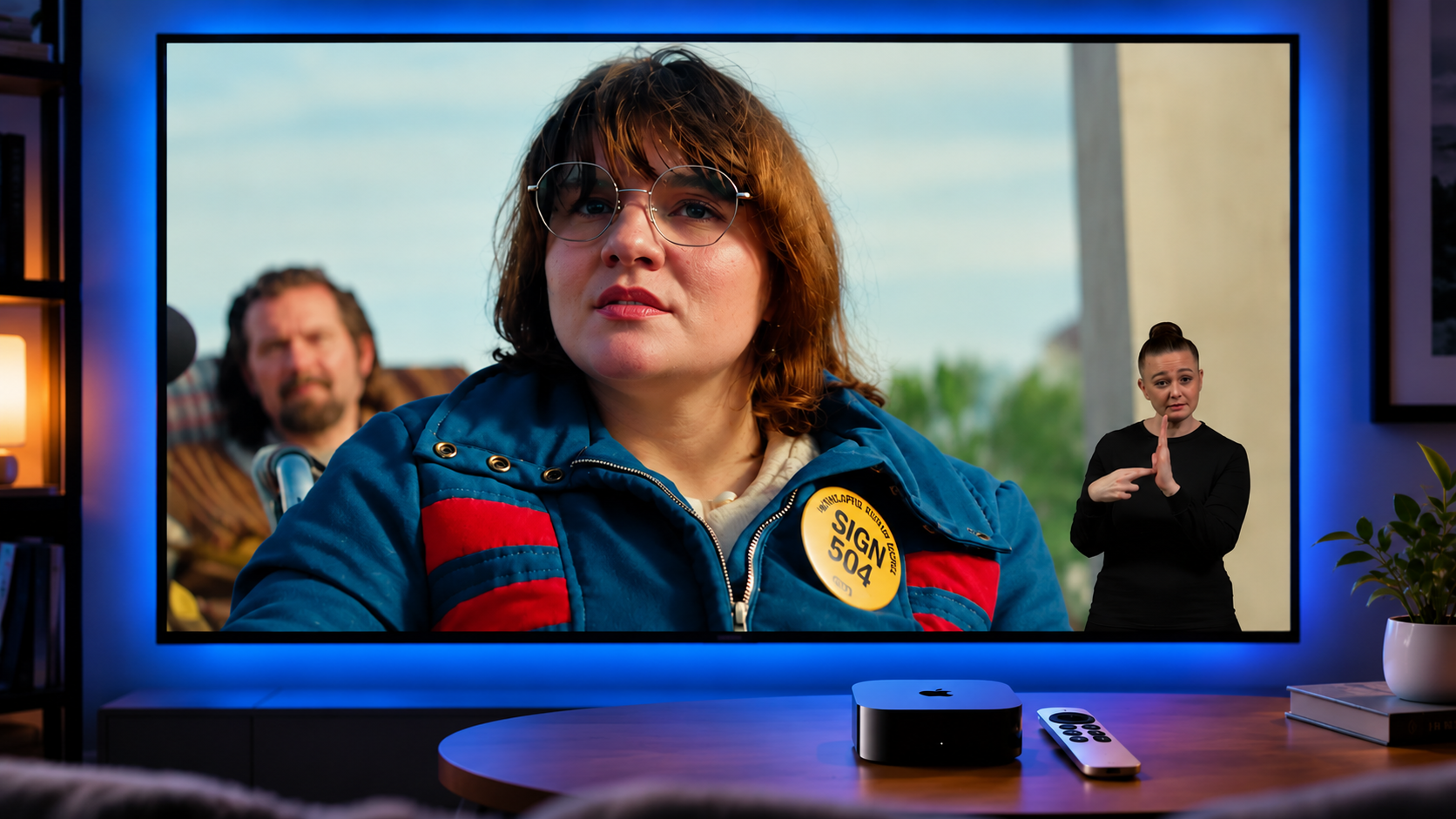
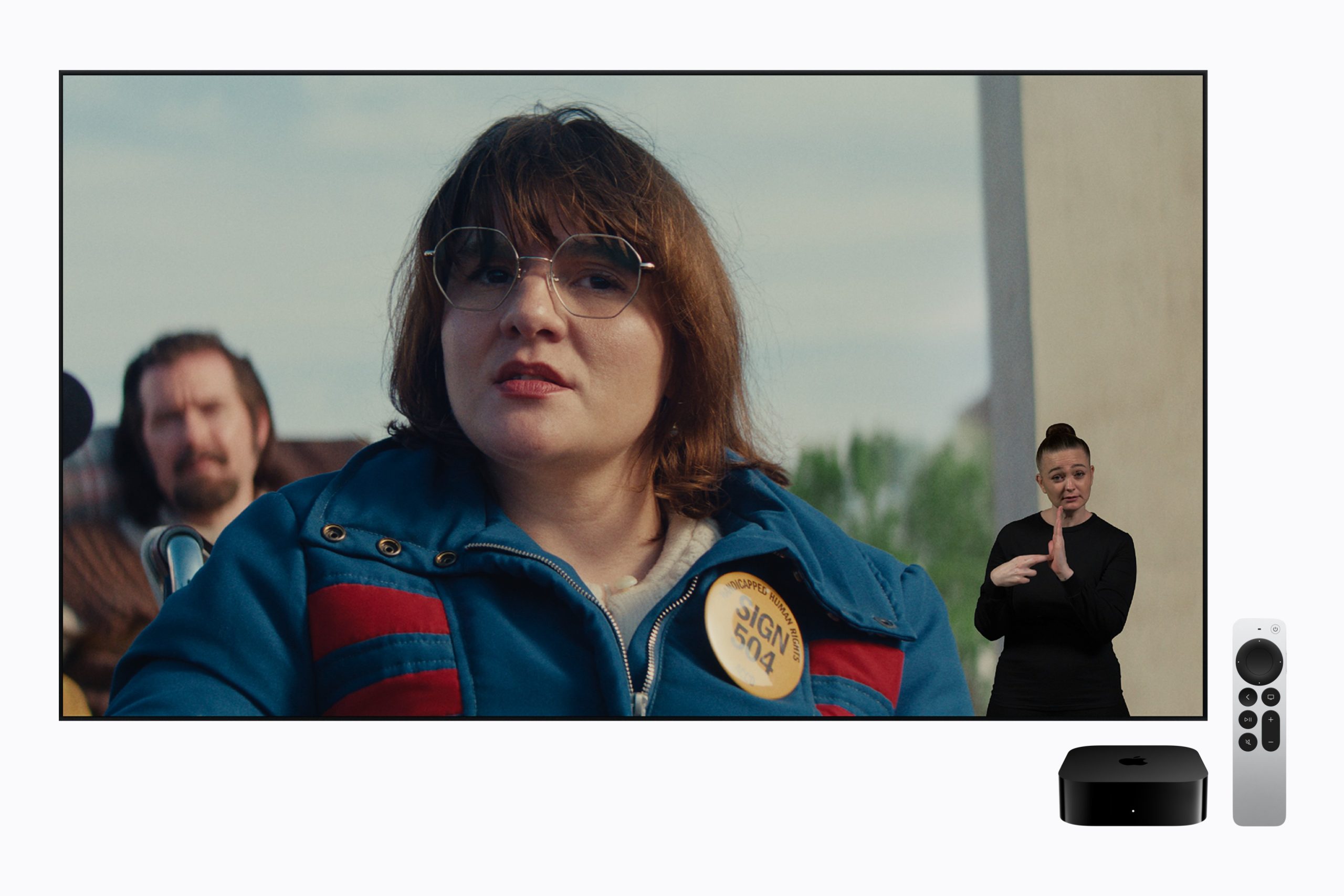
Apple TV’s new Sign Language feature places an interpreter on screen during supported titles, including Being Heumann.
One Simple Feature That Makes a Big Difference
What makes Apple’s announcement exciting isn’t necessarily the addition of sign language interpretation. Other streaming services have already started making progress in that area. It’s how Apple is implementing it.
Rather than requiring viewers to select a separate ASL version of a movie, Apple is introducing sign language interpretation directly into the playback experience. Want ASL? Turn it on. Prefer to watch without an interpreter? Turn it off. It’s that simple!
The feature supports both ASL and BSL, two completely different sign languages, and uses interpreters whose performances complement the dialogue, emotions, and storytelling. Apple says the experience was designed and tested with Deaf and native signers, which makes this announcement even more meaningful.
HBO Max and Disney Paved the Way. Apple Takes It Further.
Let’s give credit where it’s due. HBO Max has been ahead of the game by introducing separate ASL-interpreted versions of popular titles, including Barbie, The Last of Us, and House of the Dragon. Disney has also contributed to accessible entertainment through its Disney Animation’s Songs in Sign Language project with Deaf West Theatre, featuring musical sequences from Frozen 2, Encanto, and Moana 2.
Both companies deserve recognition for bringing more sign language representation to streaming. However, Apple’s approach takes things in a different direction by making interpretation an optional playback feature rather than requiring an entirely separate version.
Imagine having ASL available in the same menu as closed captions and audio descriptions. That’s the direction Apple is heading, and I would love to see other streaming platforms follow.
Bringing Authentic Sign Language to the Screen
Apple has worked with Deaf professionals to help ensure its interpretations accurately reflect the emotions and meaning behind each story. Among them is Daniel Durant, known for his role in CODA, who directed the sign language interpretation for Being Heumann.
This matters because sign language isn’t simply translating spoken words into hand movements. Facial expressions, body language, and storytelling are essential parts of the language. Having Deaf talent involved in the creative process helps deliver a more authentic experience.
See Apple’s New Feature in Action
What Can You Watch with Sign Language Interpretation?
Apple is beginning with a small selection of original movies, with additional titles planned.
Available November 13, 2026
Being Heumann — A film about disability rights activist Judy Heumann and her fight for equality. Supports ASL and BSL interpretation.
F1: The Movie — Brad Pitt’s high-speed racing drama also supports ASL and BSL interpretation.
Coming Later in 2026
Greyhound — The World War II naval thriller starring Tom Hanks.
Way of the Warrior Kid — Another Apple Original film scheduled to receive sign language interpretation.
Apple has also introduced a dedicated Movies & Shows with Sign Language collection, highlighting accessible entertainment and titles featuring sign language within their stories. That includes CODA, the Academy Award-winning movie about a hearing daughter growing up in a Deaf family, and Deaf President Now!, a documentary about the historic 1988 Gallaudet University student protest.
Keep in mind that not every title in the collection supports Apple’s new on-and-off interpretation feature. Some feature sign language as part of the story, while others may have separate ASL versions.
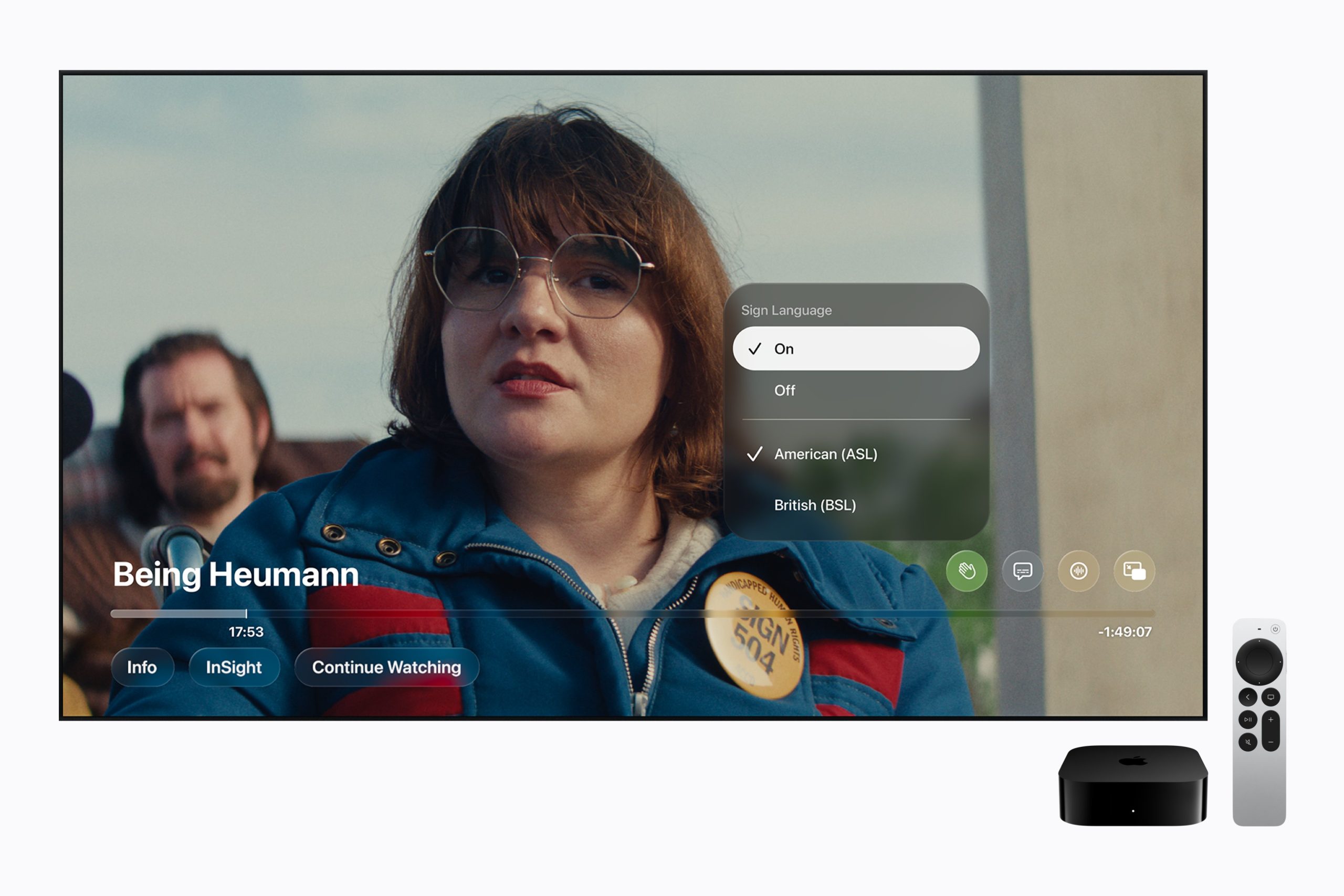
Apple has made the process straightforward. With a compatible device and updated Apple TV app, enable Sign Language in the app settings. When watching a supported title, select the Sign Language button in the player controls to activate interpretation.
Supported movies will also display a Sign Language icon, and viewers can search for titles using phrases such as “with ASL.” It’s a small adjustment to the interface that could make a big difference in how Deaf audiences enjoy entertainment.
The Sign Language setting in the Apple TV app makes it easy to turn interpretation on for supported movies and shows.
This Is the Direction Streaming Should Be Heading
As a Deaf viewer, this is the kind of accessibility improvement I love seeing. Closed captions are essential, but captions and sign language serve different needs. Some Deaf viewers prefer captions, others prefer ASL, and some enjoy both. What matters is giving everyone the freedom to choose how they experience entertainment.
Apple’s initial lineup may be small, especially compared to HBO Max’s existing ASL collection, but the technology behind this feature is what makes it exciting. Imagine opening Netflix, Disney+, HBO Max, Peacock, or Paramount+ and having an ASL option available just like closed captions. No hunting for a separate version. No unnecessary extra steps.
I would love to see Apple expand this feature beyond movies into more original series, family entertainment, documentaries, and future releases. Hopefully, this is only the beginning of something much bigger.
Accessibility shouldn’t be an afterthought. It should be part of the entertainment experience from the start.
Apple is making an exciting move in that direction, and I’m looking forward to seeing where it goes next.
I'm Deaf, and I believe every story is an opportunity to build awareness, challenge misconceptions, and celebrate the Deaf community. Through Deaf Lens, I share experiences, perspectives, and the things that matter to our community—one story at a time.